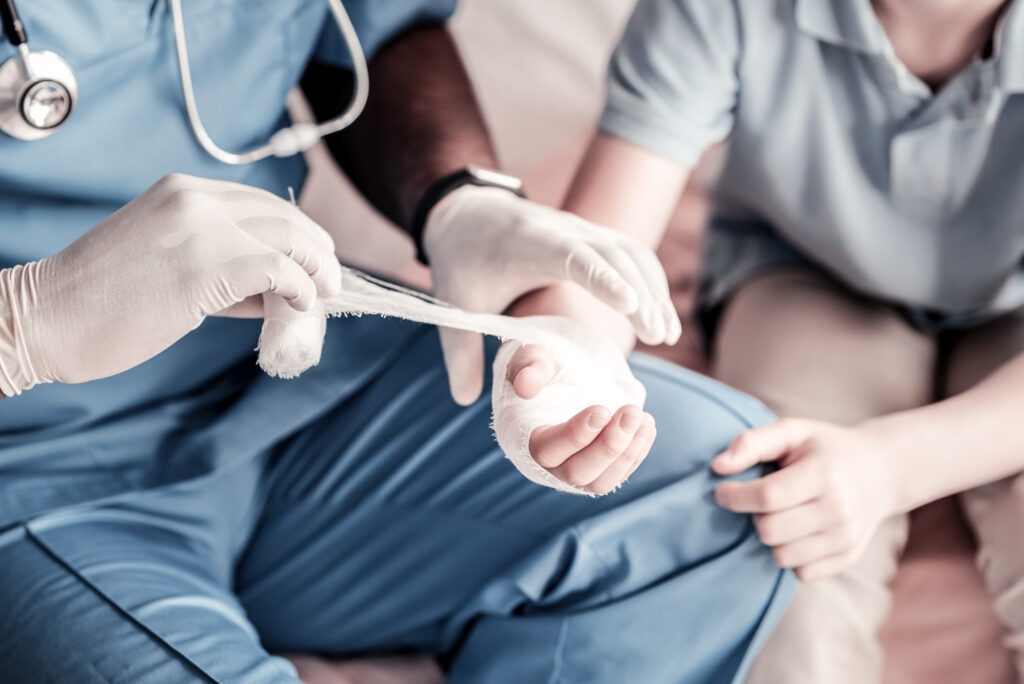
Your body begins repairing itself immediately after a cut, scrape, or surgical incision. In many cases, wounds heal without complications—but sometimes healing slows or infection develops. Knowing how to tell if a wound is healing or infected is essential for preventing serious complications and knowing when to seek professional wound care.
At Encompass Healthcare, we specialize in advanced wound healing and infection management, helping patients recover safely and effectively when wounds don’t heal as expected.
The Four Stages of Normal Wound Healing
Understanding the normal wound healing process helps you recognize whether healing is progressing appropriately.
1. Hemostasis
This stage begins immediately after injury. Blood vessels constrict and clotting occurs to stop bleeding. Hemostasis typically happens within minutes and prepares the wound for healing.
2. Inflammation
White blood cells are sent to the wound to clear bacteria and debris. Mild redness, swelling, warmth, and tenderness are normal during this phase and usually last a few days.
3. Proliferation
New tissue forms as oxygen-rich blood and collagen are delivered to the wound. The wound may appear red or slightly raised as new skin develops.
4. Maturation (Remodeling)
The wound strengthens and scar tissue gradually flattens and fades. This phase can take months—or up to a year—depending on wound severity.
Signs a Wound Is Healing Properly
Tracking your wound’s appearance and symptoms helps determine whether it’s healing or becoming problematic. Common signs of wound healing include:
- Blood clotting shortly after injury
- Mild swelling that gradually improves
- Formation of scab or new tissue
- Gradual reduction in redness and tenderness
- Scar formation over time
If a wound does not show improvement within four weeks, it may be considered a chronic wound and should be evaluated by a wound care specialist.
How to Tell If a Wound Is Infected
Recognizing infection early is critical. Signs that a wound may be infected include:
- Fever or chills, indicating systemic infection
- Increasing pain rather than gradual improvement
- Persistent or excessive bleeding
- Green, yellow, brown, or foul-smelling drainage
- Swelling, warmth, or redness that worsens over time
- Nausea or vomiting
Infected wounds can progress quickly and may lead to serious complications if left untreated.
What to Do If a Wound Won’t Heal
If a wound remains open, continues bleeding, or shows no signs of improvement, medical evaluation is essential. Treatment options may include:
- Prescription medications to improve circulation
- Topical therapies to control infection
- Wound debridement, which removes dead or infected tissue
- Compression or edema-reducing therapy
- Hyperbaric Oxygen Therapy (HBOT) to increase oxygen delivery to damaged tissue
Clinical studies show that proper wound debridement and oxygenation significantly improve healing rates in chronic wounds by promoting tissue regeneration and reducing bacterial burden.
How to Prevent Wound Infection
Preventive wound care plays a major role in healing success. Best practices include:
- Keep wounds moist and covered, not open to air
- Change dressings as directed
- Clean wounds gently with warm water and mild soap
- Avoid overuse of topical antibiotics on chronic wounds
- Monitor wounds daily for changes
Healthcare providers often follow a simple wound care principle:
“If it’s wet, dry it. If it’s dry, wet it.”
Risk Factors That Increase Infection and Delayed Healing
Certain conditions increase the risk of infection and poor wound healing, including:
- Advanced age
- Diabetes
- High blood pressure
- Obesity
- Poor circulation or vascular disease
- Weakened immune system
Patients with these risk factors benefit greatly from early wound care intervention.
When to Seek Professional Wound Care
If you’re unsure how to tell if a wound is healing or infected, it’s always safer to seek expert evaluation. Early treatment can prevent infection, reduce complications, and accelerate recovery.
At Encompass Healthcare, we provide advanced wound care solutions in a medically supervised environment—helping patients heal properly and avoid long-term complications.
References
- Guo S, DiPietro LA. Factors Affecting Wound Healing.
Journal of Dental Research, 2010.
https://journals.sagepub.com/doi/10.1177/0022034509359125 - Frykberg RG, Banks J. Challenges in the Treatment of Chronic Wounds.
Advances in Wound Care, 2015.
https://www.liebertpub.com/doi/10.1089/wound.2015.0635 - Sen CK. Human Wounds and Its Burden: An Updated Compendium of Estimates.
Advances in Wound Care, 2019.
https://www.liebertpub.com/doi/10.1089/wound.2019.0946 - National Institutes of Health (NIH) – MedlinePlus. Wound Healing and Care. https://medlineplus.gov/woundcareandhealing.html