
Pyoderma gangrenosum is a rare inflammatory skin condition that can cause rapidly progressing, painful ulcers. Because these wounds can resemble infections and other types of chronic wounds, pyoderma gangrenosum can be difficult to recognize and diagnose. Early evaluation is important because certain forms of trauma to the affected skin may actually make the condition worse.
At Encompass Healthcare in West Bloomfield, Michigan, patients with complex and non-healing wounds can receive comprehensive evaluation and individualized care. Understanding the signs of pyoderma gangrenosum and how it differs from other wounds is an important first step toward appropriate treatment.
What Is Pyoderma Gangrenosum?
Pyoderma gangrenosum (PG) is a rare neutrophilic dermatosis, a group of inflammatory disorders characterized by abnormal accumulation and activity of neutrophils, a type of white blood cell. Despite its name, pyoderma gangrenosum is not caused by gangrene, and it is not primarily a bacterial infection.
The condition most commonly causes painful ulcers on the legs, although lesions can develop elsewhere on the body. PG may begin as a small bump, pustule or blister that progresses into an open ulcer. Classic ulcers may develop irregular, undermined borders that have a red, purple or violaceous appearance.
One of the challenges with PG is that it can resemble other conditions, including infected wounds, vascular ulcers, vasculitis and other inflammatory or autoimmune diseases. This makes careful medical evaluation especially important.
Common Signs and Symptoms of Pyoderma Gangrenosum
The appearance and progression of PG can vary from patient to patient. However, common features may include:
- A small pustule, bump or blister that develops into an ulcer
- Significant or disproportionate pain around the affected area
- Rapid enlargement of an open wound
- Red, purple or violaceous wound borders
- An irregular or undermined edge around the ulcer
- New or worsening lesions following skin trauma
- Recurrent wounds or ulcers
PG most frequently affects the lower extremities, but several clinical variants exist, including classic ulcerative, bullous, pustular, vegetative and peristomal forms.
A rapidly changing or unusually painful wound should be evaluated by a medical professional rather than assumed to be a routine wound or infection.
What Causes Pyoderma Gangrenosum?
The exact cause of pyoderma gangrenosum remains incompletely understood. Current research indicates that abnormalities in immune regulation, particularly involving neutrophils and inflammatory signaling pathways, contribute to the disease.
PG can occur on its own, but it is also associated with systemic inflammatory and hematologic conditions. These may include:
- Inflammatory bowel disease, including Crohn’s disease and ulcerative colitis
- Inflammatory arthritis
- Certain blood and bone marrow disorders
- Other inflammatory or autoimmune conditions
The presence of PG does not automatically mean a patient has one of these conditions. However, depending on the patient’s history and symptoms, clinicians may investigate whether an underlying systemic disease is contributing to the skin disorder.
Why Can Pyoderma Gangrenosum Get Worse After Trauma?
One particularly important feature of pyoderma gangrenosum is a phenomenon known as pathergy.
Pathergy occurs when minor skin trauma triggers a new lesion or causes an existing lesion to worsen. Trauma can include an injury, needle puncture or medical procedure involving the affected skin. This phenomenon is one reason PG requires careful diagnosis and wound management.
In many types of wounds, removal of dead or damaged tissue through debridement can be an important part of treatment. With active PG, however, aggressive surgical or sharp debridement may potentially worsen inflammation through pathergy. Wound-care decisions therefore need to be individualized based on disease activity and the patient’s overall clinical situation.
How Is Pyoderma Gangrenosum Diagnosed?
There is no single laboratory test that definitively confirms every case of pyoderma gangrenosum. Diagnosis involves evaluating the appearance and progression of the wound, reviewing the patient’s medical history and ruling out other possible causes.
A diagnostic evaluation may include:
- A detailed physical examination
- Medical and medication history
- Blood testing
- Wound or tissue cultures when infection is a concern
- Skin biopsy
- Evaluation for inflammatory, autoimmune or hematologic disorders
- Testing for vascular or other causes of ulceration when appropriate
A biopsy can provide important diagnostic information, but its findings must be interpreted alongside the patient’s clinical presentation. PG can mimic infection and other ulcerative diseases, making a comprehensive differential diagnosis essential.
Pyoderma Gangrenosum Treatment and Wound Care
Pyoderma gangrenosum treatment generally has several goals: controlling inflammation, reducing pain, protecting the wound, promoting healing and addressing any associated systemic disease. Treatment must be individualized according to the severity, location and number of lesions, how quickly the disease is progressing, and the patient’s overall health.
Controlling Inflammation
Because PG is an inflammatory condition, treatment frequently involves medications that suppress or modify the immune response.
Corticosteroids may be administered topically, injected locally or taken systemically, depending on the severity of the condition. Other immunosuppressive or immune-modulating medications may be considered when longer-term disease control is necessary or when corticosteroids alone are insufficient or inappropriate.
Treatment decisions require careful medical supervision because medications that alter immune activity can carry significant risks and side effects.
Specialized Wound Care
Medication alone may not address every component of a pyoderma gangrenosum wound. Appropriate local wound care is also important.
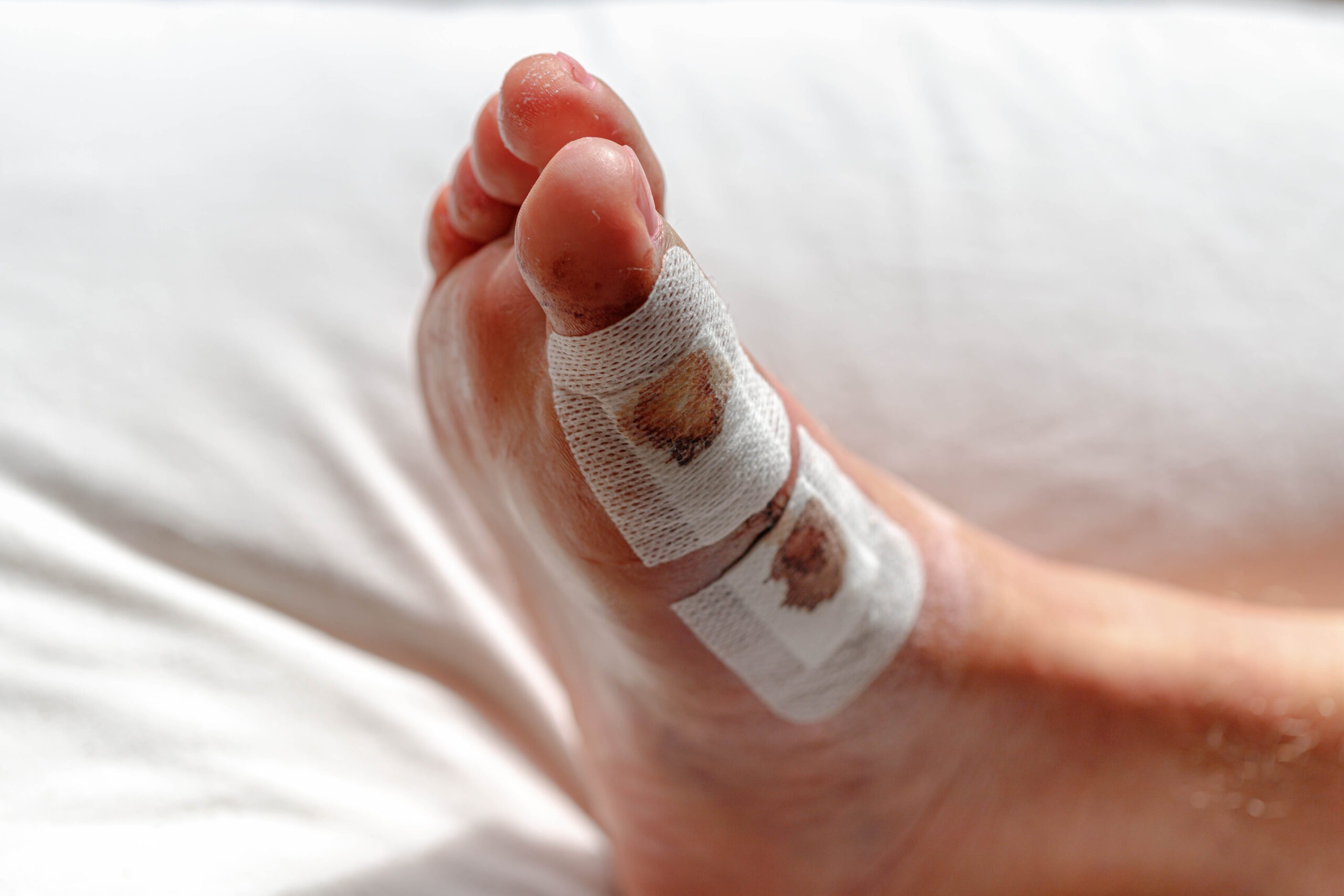
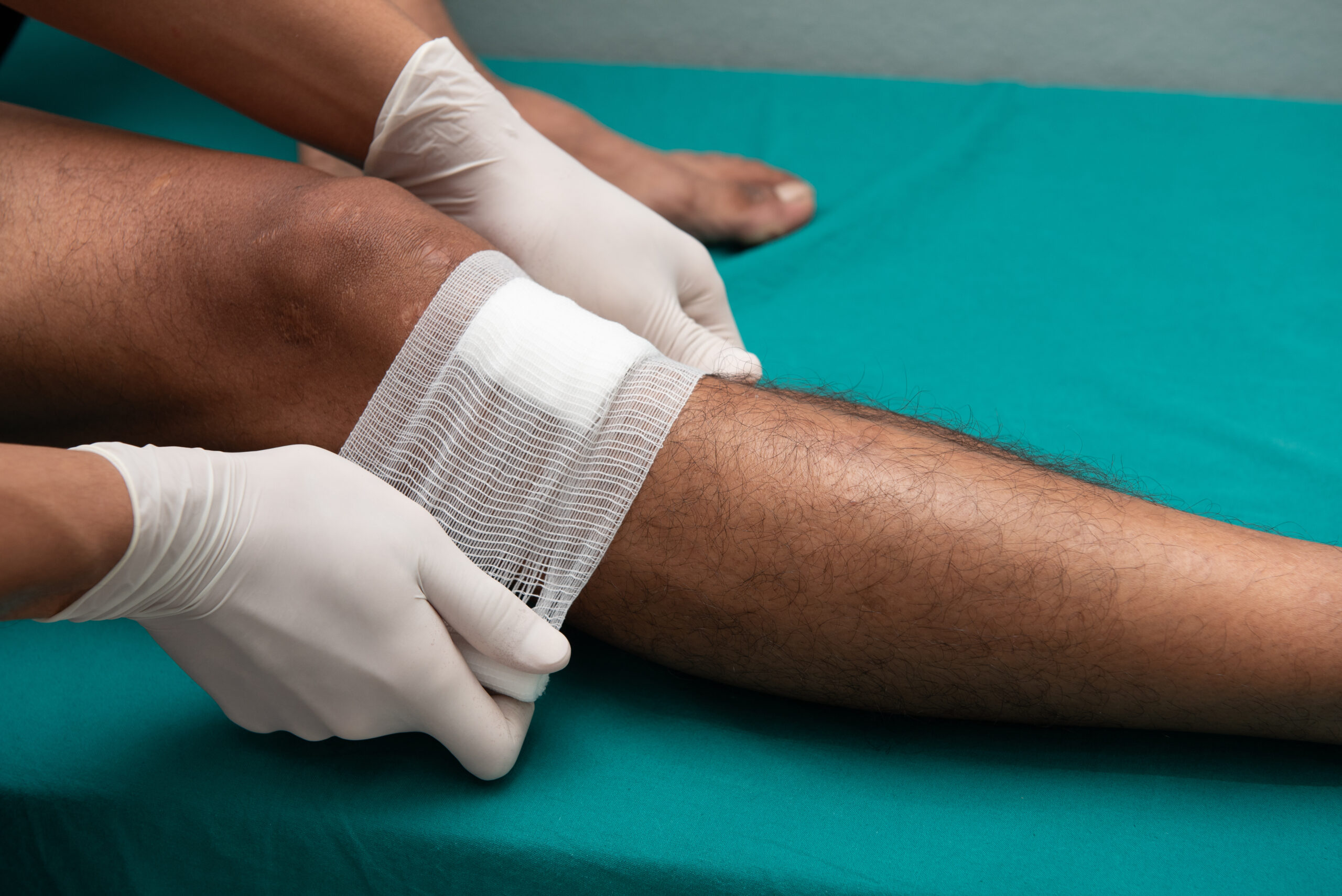
Management may include gentle cleansing, moisture-balanced and non-adherent dressings, edema management when appropriate, pain control and monitoring for secondary infection. The goal is to create an environment that supports healing while minimizing unnecessary trauma to the affected tissue.
Monitoring for Infection
Although pyoderma gangrenosum itself is not primarily an infection, an open wound can still develop a secondary infection.
This distinction is important. A wound can have PG, an infection, or potentially both at the same time. Clinicians must evaluate the wound carefully so that infection is treated when present without assuming that infection alone explains an inflammatory ulcer.
Why an Accurate Diagnosis Matters
Misidentifying pyoderma gangrenosum can delay appropriate care. A wound that continues to enlarge despite conventional treatment—or becomes worse after procedures or trauma—may require further evaluation for an inflammatory cause.
Because PG can resemble several other wound conditions, successful management often requires a multidisciplinary approach that considers the wound itself, the patient’s immune and inflammatory status, underlying medical conditions, pain and overall healing environment.
When Should You Seek Medical Care?
Seek medical evaluation for a wound that:
- Is rapidly increasing in size
- Causes severe or worsening pain
- Has unusual purple, red or undermined borders
- Continues to worsen despite treatment
- Becomes worse after minor trauma or a procedure
- Repeatedly returns
- Shows possible signs of secondary infection
- Is not progressing toward healing as expected
Rapidly progressing wounds should not be self-diagnosed. Many conditions can cause chronic or severe skin ulceration, and determining the underlying cause is essential to choosing an appropriate treatment plan.
Complex Wound Care at Encompass Healthcare in West Bloomfield

Complex wounds often require more than simply treating the surface of the skin. Understanding why a wound is not healing can be critical to determining the next steps in care.
At Encompass Healthcare in West Bloomfield, Dr. Bruce Ruben and the healthcare team take a comprehensive approach to evaluating difficult and non-healing wounds. By examining the factors contributing to impaired healing, the goal is to develop an individualized treatment strategy based on each patient’s clinical needs.
If you have a painful, rapidly progressing or non-healing wound, seeking specialized medical evaluation can help determine what is preventing healing and which treatment options may be appropriate.
Sources
- Mayo Clinic — Pyoderma Gangrenosum: Diagnosis and Treatment
Mayo Clinic: Pyoderma Gangrenosum Diagnosis & Treatment - Alavi A, et al. — “A Wound Care Specialist’s Approach to Pyoderma Gangrenosum.” Advances in Wound Care.
PubMed: A Wound Care Specialist’s Approach to Pyoderma Gangrenosum - Becker SL, Ortega-Loayza AG — “Current Landscape and Future Perspectives in the Pathogenesis and Treatment of Pyoderma Gangrenosum.”
PubMed: Pyoderma Gangrenosum Pathogenesis and Treatment - Ahn C, Negus D, Huang W — “Pyoderma Gangrenosum: A Review of Pathogenesis and Treatment.” Expert Review of Clinical Immunology.
PubMed: Pyoderma Gangrenosum Review - “Local Wound Care Management for Pyoderma Gangrenosum” — Systematic Review.
PubMed: Local Wound Care Management for Pyoderma Gangrenosum